What changed for agent builders in 2026?
A convincing demo can answer a question and call a tool. A production agent must survive a longer task, retain the right context, recover from interruption, and leave a clear record of what it did. That operational gap is why the runtime around a model now matters as much as the model itself.
OpenAI released its Agents API in public beta on September 10, 2026. Its managed harness handles session orchestration, context compaction, and recovery; developers provide the task, tools, and execution environment. The API can run code in an isolated sandbox, connect to MCP servers, and stream session events. This reduces infrastructure work, but it does not decide which business actions an agent should be allowed to take.
The useful question is therefore not 'Can the agent use tools?' It is 'Which workflow can we make measurable, bounded, and safe enough to operate every day?' The checklist below applies whether you use a managed agent runtime or build orchestration yourself.
1. Give the agent a bounded job and a clear finish line
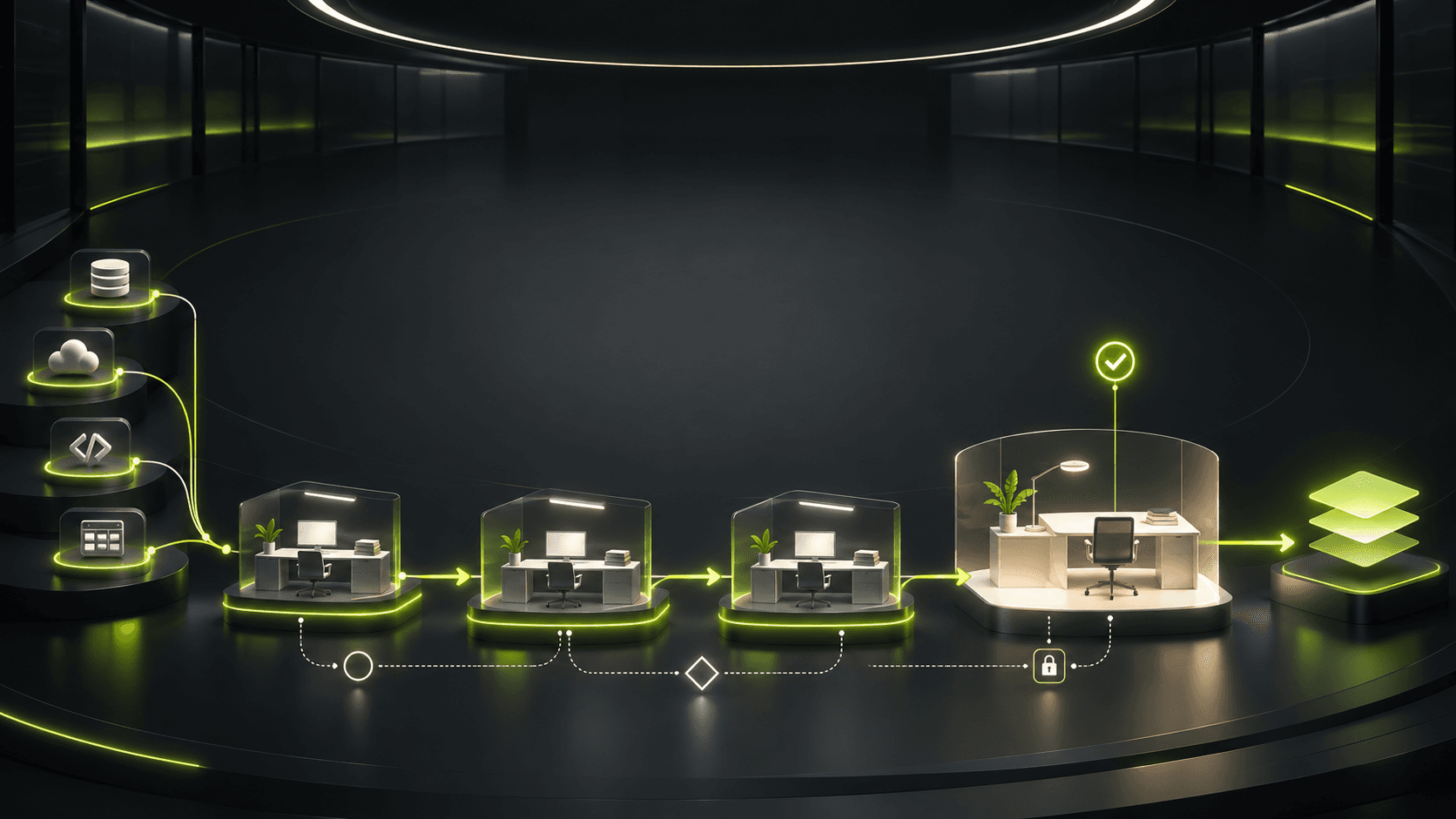
Start with one workflow that has a known input, a useful output, and an accountable owner. For example, an incident triage agent could read an alert, collect approved diagnostic evidence, draft a summary, and propose a recovery action. It should stop before changing production infrastructure until an operator authorizes that action.
Write the success criteria before selecting a model: what facts must the summary contain, which sources are acceptable, how fast must it respond, and what should happen when evidence is missing? A fixed workflow with a few deterministic steps may be simpler and cheaper than an autonomous agent. Use agentic planning only where the task genuinely requires choosing among tools or adapting to uncertain evidence.
- Define the task's input, output, maximum scope, and the person or system that owns the final decision.
- List actions the agent can take on its own, actions that need approval, and actions it can never take.
- Specify a safe fallback: ask for clarification, hand off to an operator, or stop with an honest partial result.
2. Separate the agent runtime from your business controls
The Agents API describes four core concepts: the agent's instructions and tools, the environment where it works, a durable session, and the events and items emitted as it runs. These are useful building blocks, not a complete business process. Your application still needs to decide who may start a session, which data it can see, how results are checked, and when a completed action is recorded in your system of record.
Treat every tool as a capability with a specific purpose. A read-only customer lookup and a refund operation should not share the same permission boundary. Narrow tool inputs, validate them on the server, and give the agent the least access required for the job. An isolated sandbox limits the damage of code execution, but the files, credentials, and network endpoints made available to that sandbox remain reachable by agent-generated code.
For long-running work, persist your own business identifiers alongside the session identifier. That makes it possible to reconcile a completed turn with a ticket, case, or order even after a worker restarts. Make write operations safe to retry so a resumed task cannot create duplicate emails, payments, or status changes.
3. Put approval at the point of consequence
A human review step should happen immediately before an irreversible or high-impact action, with enough context for a person to make a real decision. Show the proposed action, the evidence behind it, the exact target, and any uncertainty. Approving a vague plan at the start of a long run is weaker than reviewing the concrete change the agent is about to make.
OpenAI's Agents API supports approval requests for some shell commands, file changes, permission requests, and MCP tool calls. Its automatic review can assess supported requests, but the documentation is explicit that review does not override network restrictions. Browser origin access and sign-in requests still require application handling. Build the approval path around your own risk policy and test what happens when a reviewer denies or ignores a request.
Treat retrieved documents and tool results as untrusted input. A support ticket or web page can contain instructions aimed at the agent. Keep system instructions, user intent, and outside content distinct; validate proposed writes in application code before they reach a consequential API.
4. Evaluate the whole workflow, not only the final answer
A fluent answer can hide a failed tool call, stale evidence, or an unauthorized action. Build a small evaluation set from real, permission-safe examples before launch. Include ordinary cases, missing data, conflicting documents, malformed tool responses, prompt injection attempts, and approval denials. Record the expected outcome for each case so a pass means more than a plausible sounding response.
Measure the dimensions that matter to the workflow: task completion, factual accuracy against source records, correct tool choice, policy compliance, human escalation rate, latency, and cost per successful task. Review failed traces with the people who own the process. Re-run the set after changes to instructions, models, tools, or retrieval data; a model upgrade is a release that needs evidence, not an automatic improvement.
Keep a separate sample of live cases for ongoing review. Production inputs change, and a one-time launch score cannot reveal new failure modes. When a case fails, capture the input class, tool outputs, decision point, and human correction so the next evaluation set gets stronger.
- Check process and outcome: did the agent use the right source, respect permissions, and reach a correct result?
- Use both expected-success and expected-refusal cases.
- Set a release threshold for each critical failure mode, then inspect individual failures before broadening access.
5. Design recovery, observability, and data controls before launch
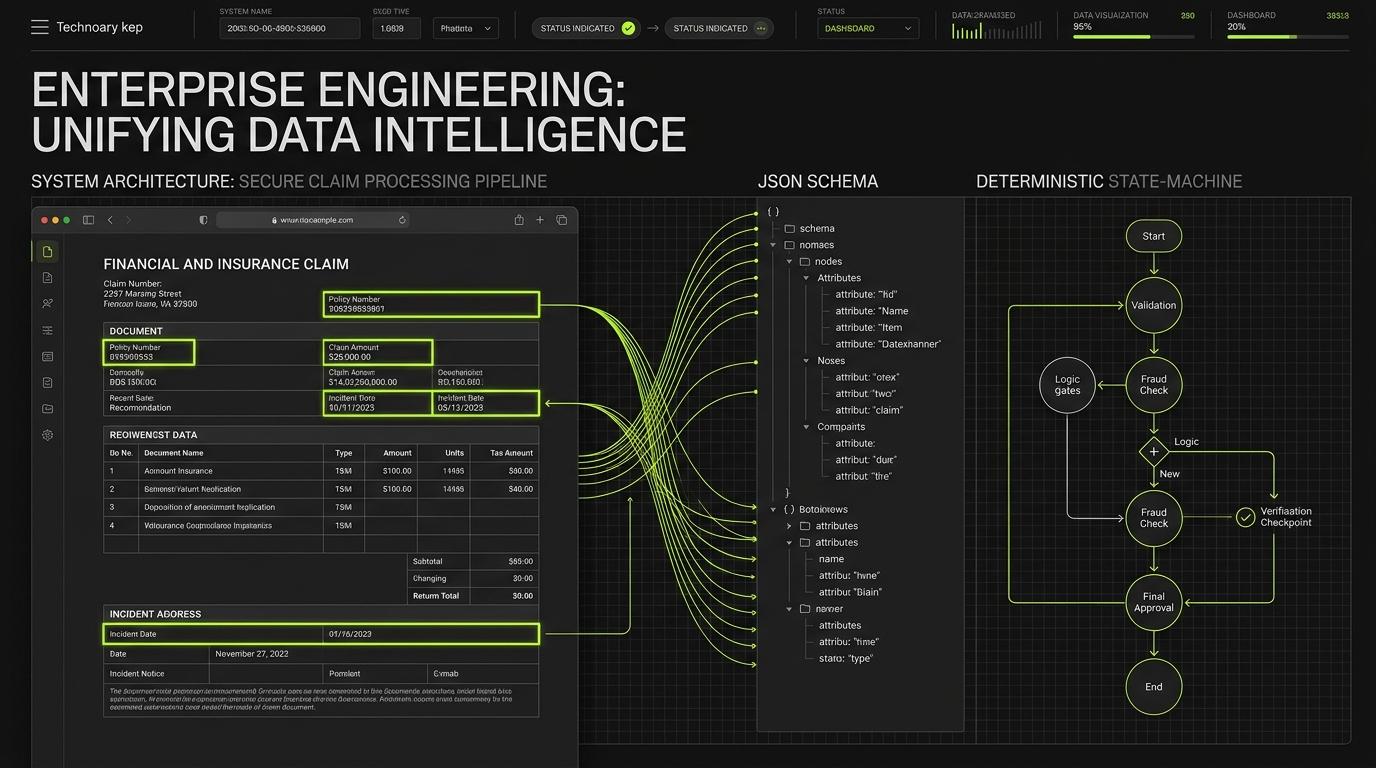
Long-running agents need a runbook. Define what happens when a tool times out, a session pauses for input, a worker loses connectivity, or the requested action has already happened. Use explicit task states, bounded retries, and idempotency keys for side effects. Log the sequence of tool calls and approvals with sensitive data redacted, and make it easy for an operator to find the decision that led to a result.
Budget for the complete workflow rather than a single model call. Monitor cost and latency per successful task, including tool usage, sandbox time, failed runs, and review effort. If a human must fix most outputs, the apparent automation benefit is misleading.
Check data controls against your requirements before choosing a managed runtime. OpenAI's current Agents API documentation says its sessions support US data residency only and are not eligible for Zero Data Retention, including when the execution sandbox is self-hosted. For workloads that require other residency or retention guarantees, verify the provider's current terms and consider a different architecture before moving real data.
The production-readiness checklist
A reliable agent is a controlled workflow with a model inside it. The runtime can keep work going; your team remains responsible for the job definition, access boundaries, approval policy, verification, and the operational response when something goes wrong. Start narrow, collect evidence, and expand the agent's authority only after it earns that trust.
- One bounded task has an owner, success criteria, and a safe stop condition.
- Every tool has a narrow purpose, server-side validation, and least-privilege access.
- Consequential actions require a review path with concrete evidence and a tested denial path.
- An evaluation set covers normal cases, ambiguous cases, adversarial input, and recovery.
- Sessions and side effects can be traced, retried safely, and reconciled with business records.
- Data residency, retention, total cost, and escalation workload meet the actual business requirements.
Key Engineering Takeaways
Related Radiaix Systems, Services & Technical References
The September 2026 release announcement and description of the managed agent harness.
Current documentation for sessions, environments, capabilities, and data controls.
Primary guidance on isolation, network access, credentials, and review.
Explore the related Radiaix service for scoped agent workflows and integrations.
A companion guide on selecting a useful first agent workflow.
Frequently Asked Questions
Does the Agents API make an AI agent production-ready by itself?
It provides managed sessions, orchestration, context management, and recovery. Your application still needs a bounded workflow, least-privilege tools, approvals for consequential actions, evaluation, monitoring, and business-system reconciliation.
What should a team test before giving an AI agent write access?
Test ordinary and ambiguous cases, malformed tool responses, prompt injection attempts, denied approvals, retries, and duplicate-action prevention. Confirm the agent uses only permitted tools and that a person can inspect the evidence behind each proposed write.
Can the current Agents API meet every data-residency requirement?
No. As of November 2026, OpenAI's Agents API documentation says sessions support US data residency only and are not eligible for Zero Data Retention. Verify current provider documentation against your organization's requirements before using real data.